20-Minute Sample
Presentation
Table
of Contents
Slide #1: A Matter
of Fat
Slide #2: What
is fat?
Slide
#3: Fat - Part of a Healthy Diet
Slide #4: Where is
fat found?
Slide #5: % Fat in
the Canadian Diet
Slide #6: Canada's
Food Guide
Slide #7: Teaspoon
Symbol
Slide
#8: Pasta and Noodles
Slide #9:
Salads
Slide
#10: Cheese
Slide #11:
Beef
Slide
#12: Lower-fat Preparation Tips
Slide #13:
Lower-fat Cooking Tips
Slide #14: Snack
Foods
Slide
#15: Fast Foods
Slide #16: Dinner
Activity
Slide
#17: Dinner Options
Slide #18:
Dessert Activity
Slide #19: Lower
Fat Dessert Options
Slide #20:
Additional Information
Slide #21:
Acknowledgement
Slide #1: A Matter of
Fat
Speaker's Notes
The purpose of this 20 minute
presentation is to help you (adults) understand the sources of fat in the diet
and to learn ways to reduce and balance the total amount of fat you
eat.
Back to
Top
Slide #2: What is fat?
FAT
- is a nutrient
- is a source of energy
- adds taste and texture
to foods
- makes us feel full
longer
- helps absorb
fat-soluble vitamins
Speaker's Notes
- Sometimes we hear about fat and
all the negative aspects � like a high fat diet can increase the risk of heart
disease
- Although true, we often forget that fat is an important nutrient in our
diet; we need it for normal body functions.
- Some fats are essential;
meaning, we need to eat them because our body cannot make these fats.
- Fat provides us with
energy.
- It adds a wonderful taste and texture to foods.
- It makes us feel full longer
because we digest fat more slowly than other nutrients.
- Fat is also important in
helping us absorb fat soluble vitamins like vitamin A, vitamin D, vitamin E,
and vitamin K.
Back to
Top
Slide #3: Fat - Part of a Healthy Diet
20 � 35% of total Calories
from fat
- 2000 Calorie diet = 44
� 78 grams of fat or 11 � 19 1/2 teaspoons
- 1500 Calorie diet = 33
� 58 grams of fat or 8 1/4 � 14 1/2 teaspoons
Speaker's Notes
- Fat is part of a healthy diet.
- Current recommendations (Dietary Reference Intakes) suggest that adults
consume between 20 and 35% of their total calories as fat.
- This range reflects a variety
of foods selected each day and represents a healthy range � levels above 35%
may increase the risk of diseases such as heart disease and obesity; levels
below 20% may increase the risk of not consuming or absorbing enough essential
fats or fat soluble vitamins.
- Typically a 2000-Calorie diet
is used as a reference � this is an average for all adults.
- A 2000-Calorie diet would mean
that 20 to 35% of fat would be between 44 and 78 grams or, later in this
presentation, it would be 11 to 19.5 teaspoons of fat, where 1 teaspoon equals
4 grams of fat.
- Women, smaller adults, or those
trying to limit total food intake may consume a diet closer to 1500
Calories.
- A 1500 Calorie diet would
contain between 8 1/4 and 14 1/2 teaspoons of fat to be within the
recommendations.
Back to
Top
Slide #4: Where is fat found?
1. Easy to see
- Fat added to foods
- Fat on the outside of
foods
- Chicken skin, outside trim on meat
2. Hidden
- Ingredient
- Snack foods, baked products, desserts
- Added in
cooking
- Fried foods, cream soups, sauces
Speaker's Notes
To be able to reduce our fat
intake, we need to know where the fat is in our diets.
Sometimes fat is easy
to spot:
- In the butter, oil, margarine
we add to foods or use in cooking foods;
- The fat on the outside of foods
like the skin on chicken and the trim on meat � these are easily
removed.
Sometimes
fat is hidden:
- We use fat as ingredients in
foods � in recipes, in baked goods;
- We use fat to cook foods � this
fat gets absorbed into foods and increases the fat content as seen in fried
foods.
Back to
Top
Slide #5: % Fat in the Canadian Diet
Speaker's
Notes
From this slide you can see that a lot of the fat we
eat comes from Other Foods:
- Other Foods are foods that are
not part of the Four Food Groups;
- It includes foods that are higher in fat or calories and/or low in other
nutrients;
- Foods in this group include oils, margarines, butter, lard, salad
dressings, mayonnaise, higher fat snack foods like chocolate bars, as well as
foods like candy, tea, coffee, water, and alcohol.
Note to leaders:
- Values are taken from the "Food
Habits of Canadians" study at McGill University.
Back to
Top
Slide #6: Canada's Food Guide
Speaker's
Notes
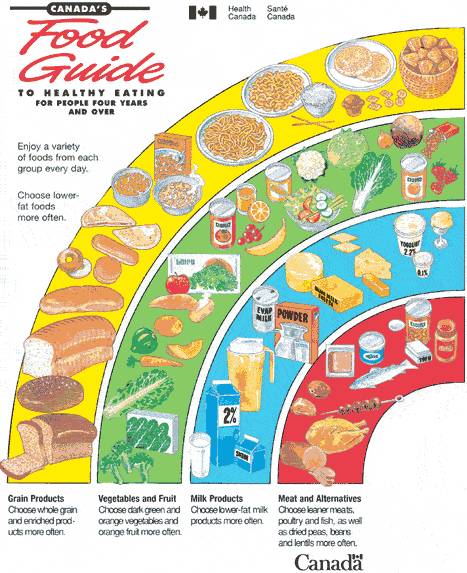
To achieve the recommended amount
of fat in a healthy diet, it is important to choose a variety of foods from all
4 food groups.
The fat we eat comes from each of the four food groups as well as other
foods. Within each food group there are many lower-fat options.
Select the
lower-fat options more often than the higher-fat choices. A high-fat diet
increases your risk of:
- weight gain or obesity
- heart disease
Canada�s Food Guide to Healthy
Eating is currently being revised. A new guide is expected in 2006.
Back to Top
Slide #7: Teaspoon Symbol
= 4 grams of
fat
Speaker's
Notes
Throughout the presentation, a
teaspoon symbol will be used to represent 4 grams of fat.
Note for leaders:
- One teaspoon (or pat) of butter or margarine contains 4 grams of fat.
- One teaspoon of oil actually
has 4.6 grams of fat.
- The amount of fat listed for
the foods is a guide. Amounts are taken from the Canadian Nutrient File,
package label, product web site listings or recipes.
- The amount of fat may differ depending on the brand, the recipe or how the
food is prepared.
- This is a guide only.
Back to
Top
Slide #8: Pasta and Noodles
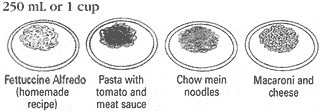
Which pasta is the lowest in
fat?
Speaker's
Notes
Which of these pasta or noodle
dishes is lowest is fat?
Answer: Pasta with tomato and meat sauce has the
least amount of fat.
- Canada�s Food Guide suggests 5-12 servings of Grain Products each day.
- When selecting grain products,
choose whole grains, such as whole wheat, oats, barley and rye, more often as
they provide additional fibre.
- Often it is the hidden fat or the fat we cook with that adds to the total
fat in our diet.
- Cooking in oil or adding cream
or cheese sauces contribute more fat than a tomato-based sauce.
- Enjoy these higher-fat sauces
less often.
- Try making the sauces with
lower-fat milk products to reduce the fat.
- For example, use skim milk or 1% milk when making a cheese sauce or use
whole milk instead of cream for the alfredo sauce.
Note to leaders:
The homemade recipe for fettuccine alfredo is made with
whipping cream, butter and parmesan cheese.
Back to
Top
Slide #9: Salads
Which salad is highest in
fat?
Which salad is lowest in fat?
Speaker's
Notes
Here are four salads. Which one has the highest fat content? Which has the
lowest fat content?
Answer: The highest is the Caesar salad and the lowest is
the Garden salad with vinegar or lemon juice.
Choose salads with care since
many may have as many Calories or even more fat than other food choices. Let�s
discuss types of salad dressings and how they influence the fat content:
- For example creamy dressings
would be higher in fat
- The caesar salad contains
anchovies, mayonnaise, oil, croutons (baked with oil), parmesan cheese � all
these ingredients contribute some fat
- The Greek salad contains oil,
olives and feta cheese which all contain fat
When people think
about decreasing fat or calories in their diet, they often choose a salad. But
this is not the best way to reduce fat.
- Ways to reduce the fat would be to ask for the dressings on the side so
that you can control the amount; or choose fat-reduced dressings.
- Adding a variety of raw vegetables will also increase the fibre and
vitamin content of the salad.
Back to
Top
Slide #10: Cheese
Which cheese is the
highest in fat?
Speaker's
Notes
Which cheese is lowest in
fat?
Answer: Both the processed cheese slices and the partly skimmed
mozzarella have the same amount of fat in these servings � but there is a bit
more cheese in the mozzarella serving.
- Adults need 2 to 4 servings of
Milk Products each day.
- All Milk Products, including
cheese, are good to excellent sources of calcium.
- A 50 gram serving of cheese is
like two thumbs� worth.
- Avoid frying cheese � it just
adds more fat.
- Try some of the wonderful
lower-fat options on the market:
- Partly skimmed mozzarella is
always available.
- At the grocery store the label on cheese will have a % B.F. or % M.F.
Value � this indicates the butter fat or milk fat in the cheese.
- Regular cheese varies in fat
depending on the type of cheese.
- For example cheddar would
have a minimum of 31% M.F.
- Lower-fat or light cheese is
at least 25% less M.F. than the regular variety
- Skim milk cheese is a maximum
of 7% M.F.
- When choosing low-fat cheese, look for less than 20% M.F. on the label.
Back to
Top
Slide #11: Beef
Which beef option has the
lowest fat level?
Speaker's
Notes
Here are 4 different servings of beef. Do you know which one has the least
amount of fat?
Answer: The trimmed sirloin steak has the least amount of fat.
- Adults need 2 to 3 servings of
meat and alternatives each day.
- Choose leaner meats more often.
There are many different cuts of beef that are considered lean or extra
lean.
- Untrimmed meat and added gravy
add to the fat in meat.
- For ground beef (raw) the
maximum permitted fat content is:
- Regular ground beef � 30%
- Medium ground beef � 23%
- Lean ground beef � 17%
- Extra lean ground beef �
10%
- The meatloaf in this slide is
made with lean ground beef.
- Research in Canada shows that the fat content of ground beef is lower than
the maximum levels permitted.
- Tips to reduce the fat in all
ground beef:
1. Crumble and pan-fry ground beef until well cooked; drain fat.
2.
Rinse the cooked beef with hot water in a colander or strainer.
3. Shake
to remove excess water and use in your favourite casserole or pasta sauce
recipe.
Back to
Top
Slide
#12: Lower-fat Preparation Tips
1. Trim and discard
visible fat from meats and skin from poultry.
2. Allow 120 g (4 oz) raw meat
per person. This will provide 100 g (3.5 oz) cooked portion � the size of a deck
of cards.
3. Omit oil from marinades.
Speaker's Notes
The next two slides contain lower-fat preparation tips for meat, fish and
poultry. These Meat and Alternatives can be easily prepared and eaten in a
lower-fat way.
In preparation it
is important to:
- Reduce the visible fat � the
fat that you can easily see and remove.
- Avoid large portions (or supersize options in restaurants).
- Reduce or eliminate the added
fats, like the oil in marinades; this will not change the
flavour.
Back to
Top
Slide #13: Lower-fat Cooking Tips
1. Broil, bake, barbecue,
roast, microwave, stir-fry or brown in a non-stick pan.
2. Brown ground meat
or poultry in a pan or microwave in a plastic sieve and drain off fat before
adding other ingredients.
3. Refrigerate stews, soups, chilies and meat
sauces and remove hardened fat that rises to the surface.
Speaker's Notes
In cooking it is important to:
- Choose methods that do not add
fat to the food (deep frying adds the most fat compared to other cooking
methods).
- Remove fat formed in cooking by draining the fat or removing hardened fat
in soups, stews or sauces.
- Choose cream sauces and gravies less often as they add fat to your diet.
Back to
Top
Slide #14: Snacks
Which snack food has the
lowest amount of fat?
Speaker's
Notes
Here are more examples of snack foods. Which has the lowest amount of
fat?
Answer: Raisins have the least amount of fat.
- Dried fruit is an excellent choice and can easily be stored in your desk
at work:
- For dental health, brushing
teeth after eating dried fruit is recommended.
- For items like granola bars,
check the label. Each variety contains different ingredients altering the fat
content as well as the fibre level.
- Granola bars that are covered
in chocolate or contain chocolate chips are usually higher in fat.
Back to
Top
Slide #15: Fast Foods
Which fast food option has
the lowest amount of fat?
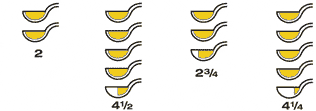
What should you look for
when choosing fast foods?
Speaker's Notes
- We�ve all been to fast food
restaurants and wondered what we should order.
- Some restaurants are now
offering �healthier� choices.
In these examples, which one do you think
has the lowest amount of fat? (Hint: think of hidden fat.)
Answer: regular
single patty hamburger.
- Breaded and deep-fried foods or
those with added sauces tend to be higher in fat � choose these less
often.
- Also, depending on the fat
source used for frying, deep-fried foods may contain higher levels of trans
fats.
When at a fast
food restaurant, what should you look for in choosing lower-fat
options?
Answers:
- Reasonable serving sizes (not
supersized).
- Items that are not fried.
- Items without a lot of sauces,
or ask for your burger or chicken sandwich without the sauce, or ask for sauce
on the side and control the amount.
- Ask for lower-fat salad
dressings.
- Look for grilled and not breaded items � many chicken sandwiches are
breaded and fried. Choose the grilled chicken instead.
Back to
Top
Slide #16: Dinner Activity
- Contains almost 15
teaspoons of fat
How would you lower the
fat in this dinner?
Speaker's Notes
Let�s discuss ways in which we could change this dinner menu to decrease the
fat content.
Note to leaders:
Have an open
discussion with your group to determine if they can use some of the information
from previous slides to think of lower-fat alternatives.
Back to
Top
Slide #17: Dinner Options
- Contains three and a
half teaspoons of fat
Speaker's
Notes
Here is an example of a lower-fat dinner with similar foods to the previous
slide.
Other options include:
- Soup � use any broth-based, or
thick soup with blended vegetables rather than cream.
- Vegetables - any steamed
vegetables; grilled vegetables are another option with some fat but still
lower than adding sauces or frying vegetables.
- Any lean meat � beef steak,
pork loin/tenderloin, chicken breast as long as the meat is trimmed of fat,
there is no added sauce, and the method of cooking is not frying but broiling,
baking or grilling instead.
- Drinks � water, low-fat milk, 100% fruit juice are healthy options.
Alcoholic drinks should be limited to 1-2 drinks maximum per day.
- In addition to whole wheat bread, other low-fat grain options would be
plain rice, couscous, other whole grain breads, pasta with a tomato based
sauce, etc.
Back to
Top
Slide #18: Dessert Activity
What are some lower fat
options?
Speaker's Notes
Here are some common dessert or coffee break items. What are some options for
dessert that would be lower in fat?
Let's discuss a variety of
options.
Remember:
- Foods that are fried are higher in fat.
- Foods made with a lot of butter, cheese or shortening (pie crusts) tend to
be higher in fat.
- Milk products have a number of
lower-fat options.
Back to
Top
Slide #19: Lower Fat Dessert Options
Speaker's
Notes
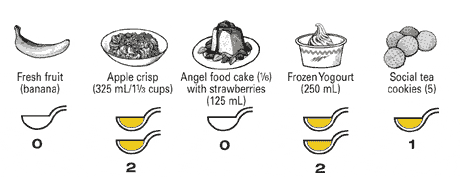
- Here are some examples taken from the booklet that are lower-fat desserts.
- Adding fresh fruit or a fruit pur�e makes the angel food cake seem much
richer and more flavourful.
Other suggestions:
- Baked fruit (1 1/2 teaspoons of
fat)
- Lower-fat muffins (1/2 teaspoon
of fat ) � tim hortons low fat muffin options
- Sherbets (0 teaspoons of fat)
- Lower-fat granola bars (1 1/2
tsp or less of fat).
Note to leaders:
The crisp
value above is from a recipe using 50 mL of melted butter instead of 1/2 cup of
solid butter in the recipe.
Back to Top
Slide #20: Additional Information
Nutrition Labelling resources:
www.healthcanada.ca/nutritionlabelling
www.healthyeatingisinstore.ca/
Canada�s
Food Guide to Healthy Eating:
www.hc-sc.gc.ca/hpfb-dgpsa/onpp-bppn/food_guide_e.html
Nutrition
information and activities:
http://www.dietitians.ca/
Recipes and
more nutrition information about beef:
http://www.beefinfo.org/
Back to Top
Slide #21: Acknowledgement
Reviewed by:
Laurie Barker, RD, Sobeys, Nova
Scotia
Lisa Boyce, RD, Health Sciences Centre, Winnipeg, Manitoba
Heather
Deegan, MSc, RD, Public Health Nutritionist, Ontario
Nancy Doern-White, RD,
Health Sciences Centre, Winnipeg, Manitoba
Isabelle Huot, Chroniqueur
nutrition, Montreal, Quebec
Ramona Josephson, RD, Your Nutrition Coach,
British Columbia
Kathy Ladd, RD Health Sciences Centre, Winnipeg,
Manitoba
Sarah O�Brien, RD, Nutrition Resource Centre, Ontario
Written by: Laura
Pasut, MSc, RD, Nutridata Consulting Services
Developed by: The
team of Registered Dietitians at the Beef Information Centre
June 2004
Back to Top